

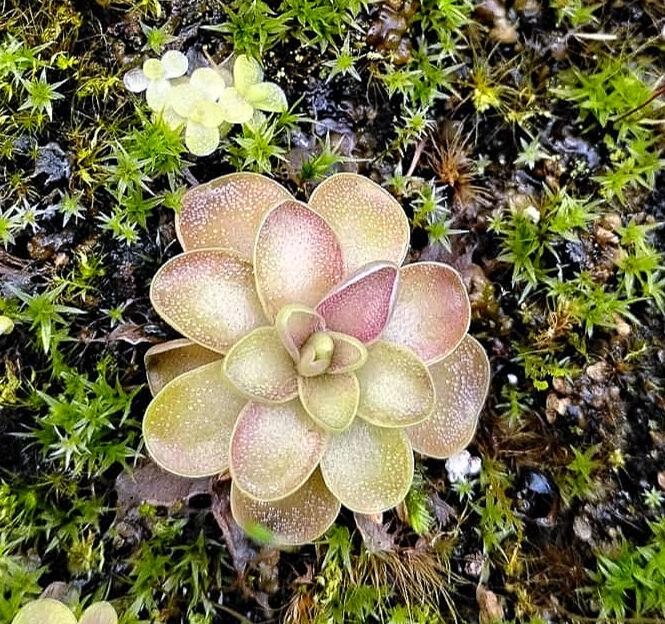


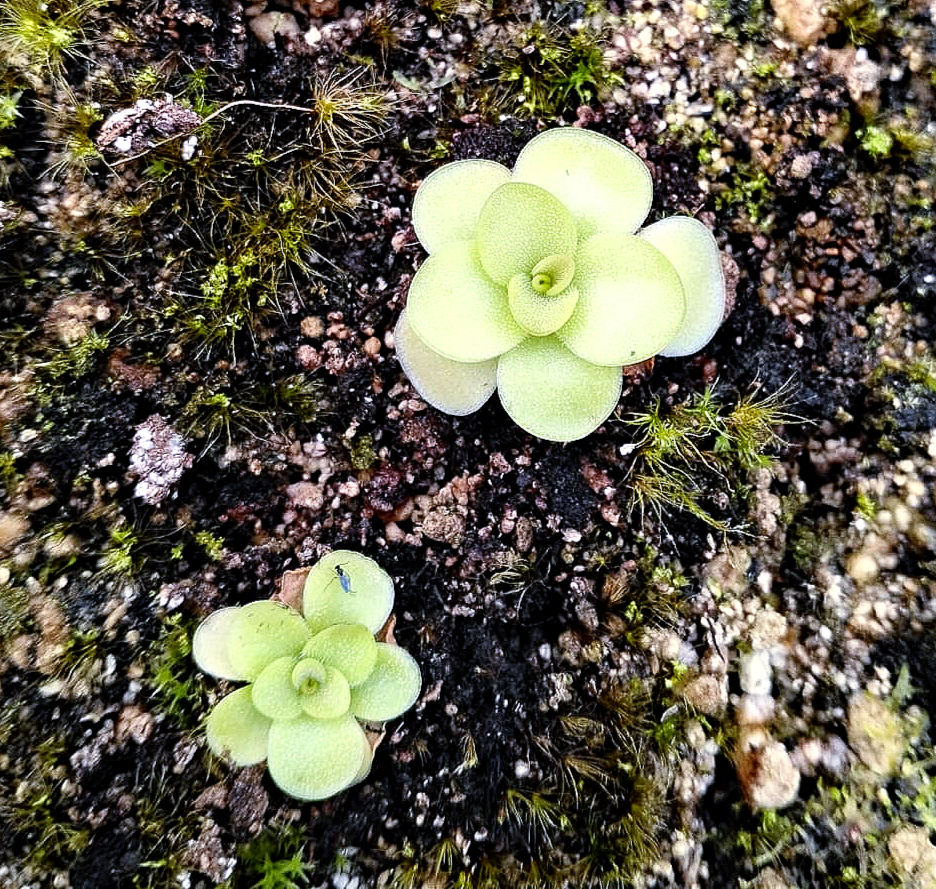

Second picture is actual pings you will receive
Diffrence between picture 1 and 3 of our mother stock - is due to 2 different camera's being used. (1 look the closesed to actual plant)
🌿 Mexican Pinguicula (Butterwort) Care SheetMexican Pinguicula, commonly known as Butterworts, are easy-to-grow carnivorous plants that trap tiny insects using their sticky leaves. They are perfect for windowsills, terrariums, and indoor collections.
☀️ Light
Provide bright, indirect light or a few hours of gentle morning sun. Avoid harsh afternoon sun, which can scorch the leaves. Good light encourages compact growth and vibrant colours and quality LED lighting make them pop!
💧 Water
Use only rainwater, reverse osmosis (RO), or distilled water.
During active growth, keep the growing medium slightly moist by watering from the tray. Allow the tray to dry for a day or two before refilling.
Many Mexican Pinguicula form a succulent winter rosette. During this period, reduce watering and keep the medium only slightly damp.
🌡️ Temperature
- Ideal: 18–28°C
- Winter: 10–20°C
- Minimum: 5°C and out of a draft
Protect plants from frost.
💦 Humidity
Average household humidity (40–70%) is usually sufficient. Good airflow is just as important as humidity.
🪨 Growing Medium
Use a well-draining, mineral-poor carnivorous plant mix containing materials such as perlite, pumice, silica sand, and a small amount of peat moss. Avoid nutrient-rich potting soil AT ALL COST.
🪰 Feeding
Butterworts naturally catch fungus gnats, fruit flies, and other tiny insects. If grown indoors, they can occasionally be fed very small insects or a suitable carnivorous plant fertilizer. Do not overfeed.
🌱 Dormancy
Many species produce succulent, non-carnivorous leaves during winter. This is normal.
✔️ Reduce watering during this period.
✔️ Resume regular watering when sticky carnivorous leaves return in spring.
Some hybrids remain carnivorous all year.
🔄 Repotting
Repot every 1–2 years, preferably just before active growth resumes.
⚠️ Common Problems
- Soft or rotting centre: Too much water or poor drainage.
- Long, pale leaves: Not enough light.
- Brown leaf edges: Mineral-rich water, excessive fertilizer, or natural ageing.
- No sticky leaves: Low light, recent transplanting, or winter dormancy.
🌿 Propagation
Most Mexican Pinguicula are easily propagated from healthy leaf pullings placed on slightly damp growing medium in bright, indirect light. – *Winter pullings deliver the best results*
📝 Note
Mexican Pinguicula are highly hybridized. Plant names are based on the identification supplied by our growers, and we cannot guarantee their taxonomic accuracy.