






2026 seeds
Picture 1 = actual seeds packed
Common Name:
Bird's nest Sundew
Scientific Name:
Drosera nidiformis
Description
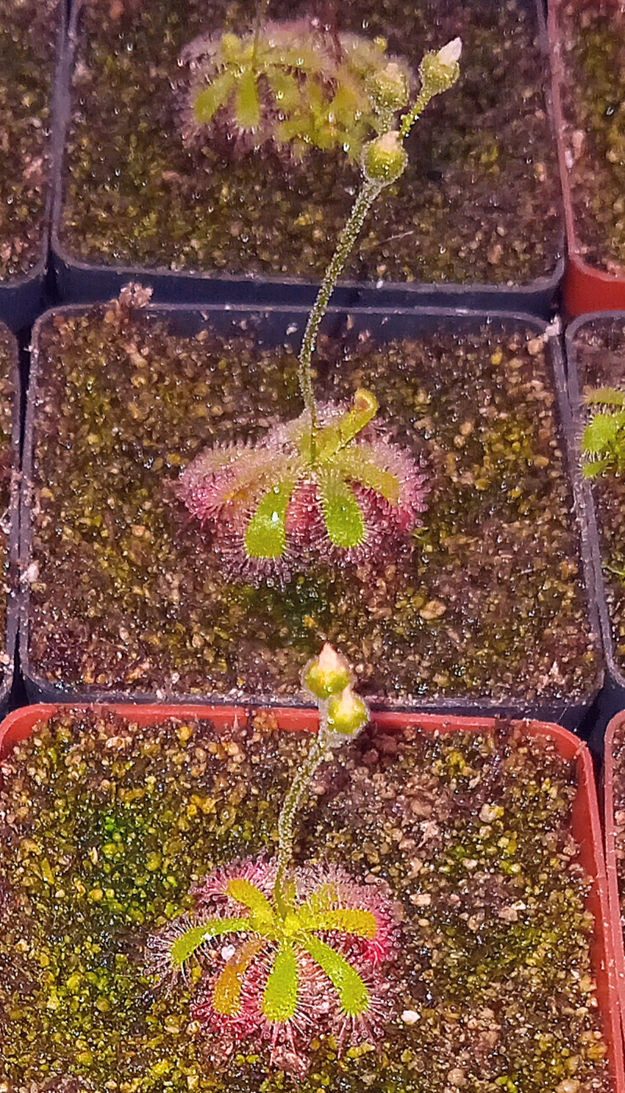
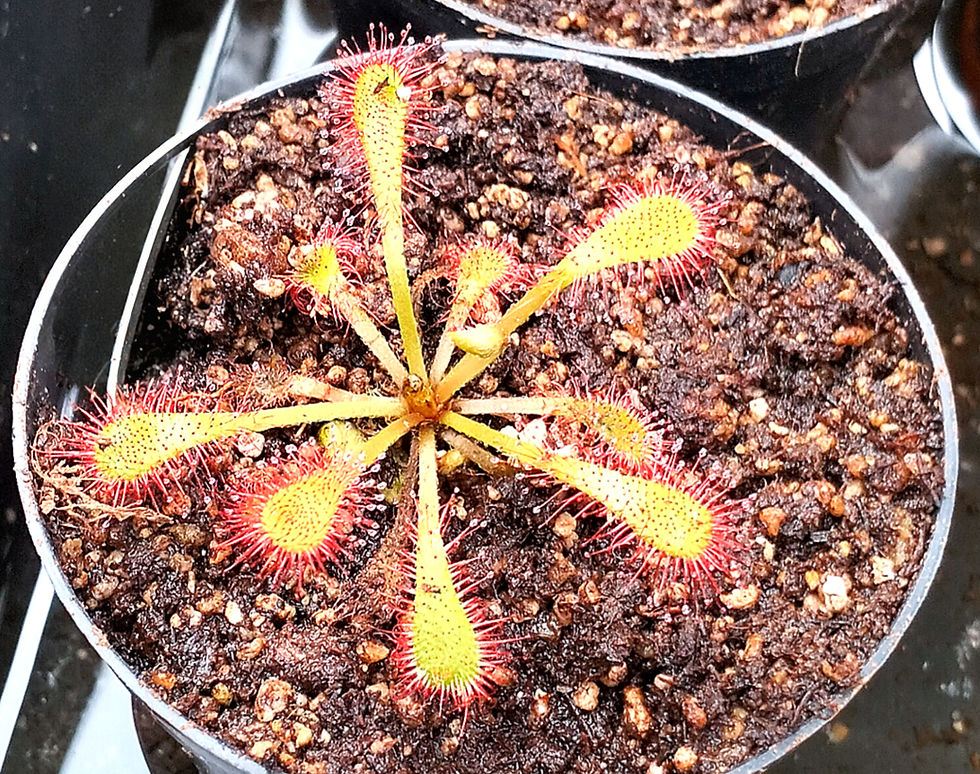
Drosera nidiformis is a fast-growing carnivorous plant native to southern Africa. Its name means “nest-shaped,” referring to the rosette formed by its elongated leaves. Each leaf is covered in glistening, sticky tentacles that trap and digest small insects. Bright light encourages reddish coloration, and mature plants produce delicate white flowers on tall stalks. Its vigorous growth and straightforward care make it an excellent choice for beginners.
Light
Provide bright light and approximately 4–6 hours or more of direct sunlight daily, gradually acclimating plants to stronger conditions.
Strong light encourages compact growth, red coloration, and abundant dew.
Indoors, provide 12–14 hours of full-spectrum grow lighting daily.
Temperature
Ideal daytime temperatures: 20–30°C (68–86°F).
Night temperatures around 15–22°C (59–72°F) are suitable.
Protect plants from frost and prolonged temperatures below 5°C (41°F).
Humidity
Moderate to high humidity of approximately 50–80% is suitable.
Maintain good airflow, particularly when growing seedlings in covered containers.
Water
Use only rainwater, distilled water, or reverse osmosis (RO) water.
Keep the growing medium consistently moist using the tray method, with approximately 1–2 cm of water in the tray during active growth.
Never allow the medium to dry out completely.
Reduce standing water during cooler periods if evaporation slows.
Soil
Use a nutrient-poor carnivorous plant mix.
A 1:1 mixture of peat moss and perlite or silica sand provides suitable moisture retention and drainage.
Sow seeds on the surface of moist soil. Do not cover them, as light helps germination.
Germination
Sow seeds on moist soil and gently press them into contact with the surface.
Provide bright light, consistent moisture, and temperatures around 20–25°C (68–77°F).
Seeds commonly germinate within 2–6 weeks, although timing varies with freshness and growing conditions.
Cold stratification is generally not required.
If using a covered container, provide ventilation and gradually acclimatise seedlings after germination.
Transplant only once seedlings are well established and have developed several true leaves.
Feeding
Mature plants catch small insects naturally.
Indoor plants may occasionally be fed tiny insects, such as fungus gnats or fruit flies.
Avoid feeding young seedlings or offering large insects.
Potting and Repotting
Repot every 1–2 years, or when the growing medium breaks down.
Use fresh carnivorous plant soil and handle the roots gently.
This fast-growing species may produce many seedlings, so allow sufficient space for mature rosettes.
Pruning
Remove dead leaves as needed.
Remove flower stalks after flowering unless you wish to collect seeds.
Allow seed capsules to mature and dry before harvesting.
Pests and Diseases
Inspect occasionally for aphids, spider mites, and mealybugs.
Good airflow and appropriate spacing help prevent fungal growth and algae around seedlings.
Dormancy
Drosera nidiformis does not require a true winter dormancy.
It can grow year-round when provided with suitable warmth, light, and moisture.
Protect plants from frost and prolonged cold exposure.
Propagation
Easily propagated from seed.
Leaf or root cuttings may also succeed under suitable conditions.
Mature plants can self-seed when growing conditions are favourable.
Caution
Never use conventional plant fertilisers in the growing medium. Fertiliser salts can damage or kill carnivorous plants.
Always use low-mineral water and nutrient-poor soil.
Growing Tip
Sow Drosera nidiformis seeds on the surface of moist carnivorous plant soil and provide bright light, warmth, and consistent moisture. This fast-growing sundew can develop into attractive, dew-covered rosettes and eventually produce its own flower stalks and seeds.